
Naivedyam Child Development Centre And Rehabilitation Center, City Center, Gwalior
Every child deserves a
chance to shine
At Naivedyam, we walk beside parents through every step of their child's development — with physiotherapy, speech therapy, occupational therapy, sensory integration, and special education in a space built for healing.
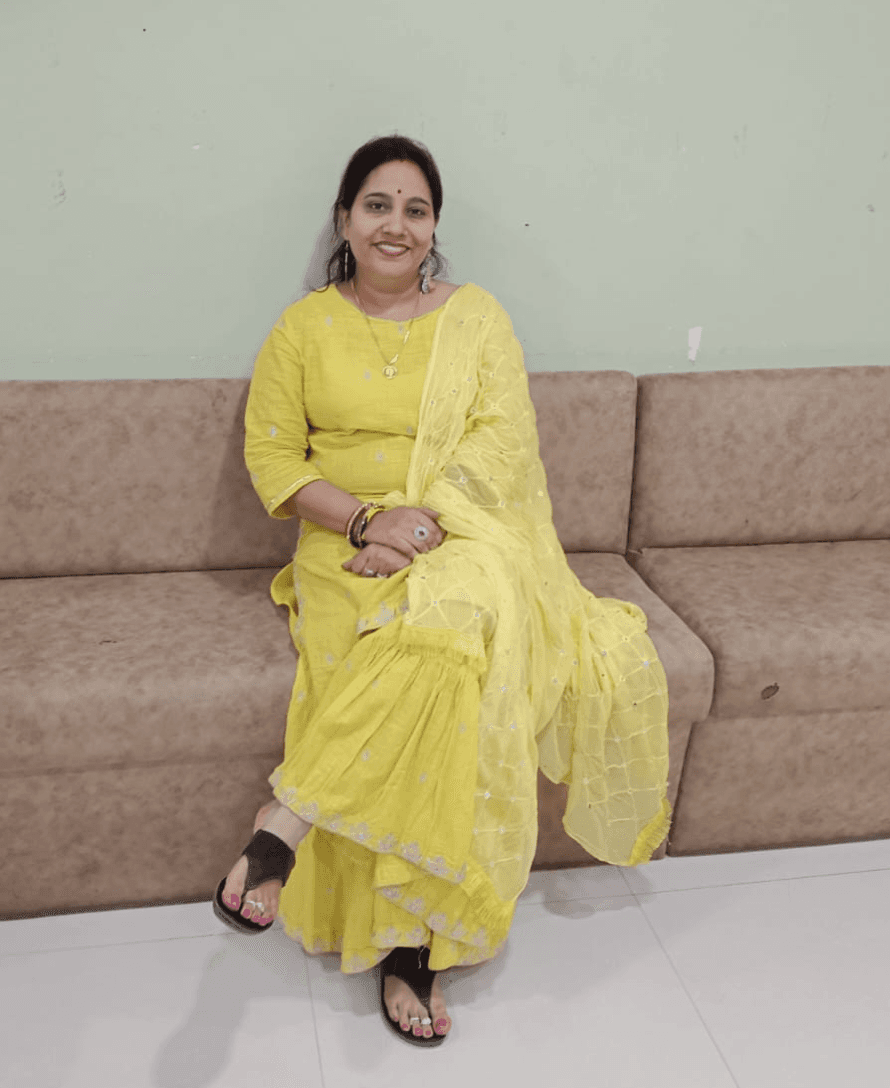
Every child has their own pace. Our work is to walk with them — never ahead, never behind.
Maya DubeyAutism & ABA Specialist
For over fifteen years, Maya has walked beside families through the quiet, hard, hopeful work of raising children with different abilities.
Her path took her through Roshni, RKVM, and Ehsaas — three of central India's most respected centers — before she founded Naivedyam to bring that same depth of care home to Gwalior.
She specialises in Autism Spectrum support and Applied Behaviour Analysis (ABA), but what parents remember is something simpler: she sees their child. Fully. Without rush.
Every child has their own pace. Our work is to walk with them — never ahead, never behind.
Six paths to your child's flourishing
Each therapy is a different way of meeting your child where they are — and walking with them, at their pace, toward their own version of thriving.
ABA Therapy
Behaviour, broken into kindness.
Applied Behaviour Analysis builds new skills through patient, evidence-based repetition — celebrating each small win until it becomes part of who your child is.
Speech Therapy
For the words still finding their way.
Sensory Integration
Helping the world feel less loud.
Physiotherapy
For every step worth celebrating.
Occupational Therapy
Daily life as a quiet superpower.
Special Education
Learning, but paced for them.
A curriculum that adapts to your child — not the other way around. Reading, numeracy, social learning, designed for how they actually think.
Different ways of being, fully welcomed
Every child here is met with curiosity, not correction. These are the differences we know well — and the strengths we look for first.
We describe each condition starting with what we see in these children first — their strengths. Diagnosis matters for guiding therapy. It does not define your child.
Don't see what you're looking for?
We work with many other developmental differences, behavioural challenges, and unclear diagnoses. Reach out — we'll listen first, then tell you honestly whether we're the right fit.
What growing looks like, really
We don't promise transformations. We walk beside children — and we measure the journey the way it actually unfolds.
Progress doesn't move in a straight line.
Real growth looks like leaps and plateaus, restarts and slow turns. Some weeks bring a breakthrough; others ask only that we stay. We honour every part of that journey — and we measure it the way it actually unfolds, not the way it ought to look on a chart.
A line that's been honest about its own journey.
Small moments. Sacred ones.
These are composite milestones from the families we work with — the kinds of moments parents tell us they want to hold onto forever.
Settling into the room
Trust-building sessions help the child feel safe — beginning to respond to their therapist by name.
First sustained eye contact
Joint-attention play and turn-taking exercises open the door to connection.
A first clear word
Following structured speech sessions and gentle repetition at home — "mama," "papa," or a favourite name said deliberately.
Staying with the group
After sensory regulation work, the child sits through a 20-minute group activity, engaged and calm.
Self-initiated play
They walk over to another child and invite them — not prompted, not coached. Their own choice.
Quiet independence
Buttoning a shirt. Asking for water without being asked first. Writing their name. Daily living, made their own.
Six dimensions of growth
Not percentages. Not point scores. Real, qualitative shifts in how a child meets the world.
Eye contact
Communication
Motor skills
Self-regulation
Daily living
Social engagement
“What we're really measuring is the child becoming more themselves.”
— Maya Dubey, Founder
Inside our center
Bright therapy rooms, a sensory gym, and a welcoming space for families — built so children feel safe to explore, play, and grow.
Tap any photo to view it larger. We're happy to show you around in person during your free assessment visit.
In their own words
Real families talking about real moments. Each story shared here was given to us — and is kept here — with permission.
He told me — with words — that a boy made him laugh.
When we first came here, my son wouldn't look at anyone for more than a second. He's been with Maya for almost a year now. Last week he came home from school and told me — actually told me with words — that a boy in his class made him laugh. I sat in the kitchen and cried. I don't know how to explain what that felt like. They didn't promise me anything when we started. They just kept showing up.
A note on consent: Every story shared here represents a family who explicitly chose to share it with us. Names and identifying details are used only with written permission. We never publish details about a child without their family's full agreement.
Once a child settles in, families tend to stay through their full therapy arc.
Most new families come from a parent who walked the path before.
Therapy plans are explained in the language a parent thinks in.
My daughter used to scream every time we tried to put on her shoes. Six months of OT and now she puts them on herself. Slowly, sometimes wrong feet, but she does it. The therapist never made me feel like we were behind.
The first time I walked in, I noticed they had soft floor cushions and the lights weren't too bright. Small thing, but it told me they actually understood what my daughter needs. Three months in and she walks into the room by herself.
I had been to four other centers. This was the first one where they let me sit in the room and watch a session. They explained what they were doing, in Hindi, slowly. I left knowing my grandson was in good hands.
Some stories aren't ready to be shared yet — and we hold those just as carefully.
Book a Free Assessment
Embedded Google Form